
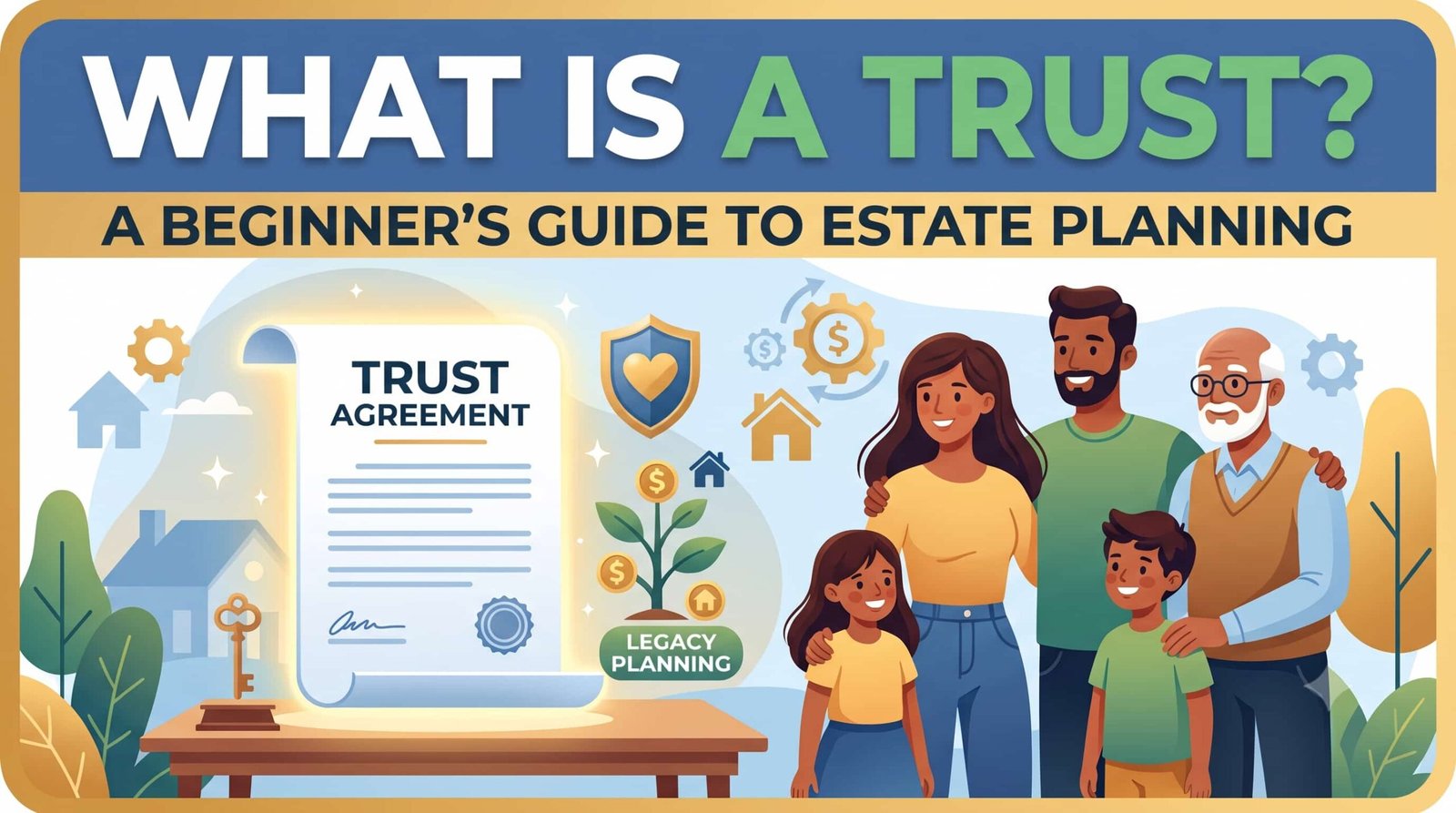
Many people assume trusts are only for the wealthy, but that’s one of the biggest misconceptions in estate planning. In reality, trusts can benefit individuals and families of many different financial backgrounds by helping protect assets, simplify the transfer of property, and ensure your wishes are carried out.
Whether you’re planning for your family’s future or simply exploring your estate planning options, understanding how trusts work is an important step. For more educational content, visit our Estate Planning Resources.
What Is a Trust?
A trust is a legal arrangement that allows one person (the trustee) to manage assets on behalf of another person or group of people (the beneficiaries).
The person who creates the trust is known as the grantor (or settlor). They transfer assets such as real estate, bank accounts, investments, or personal property into the trust according to specific instructions.
The trustee is responsible for managing those assets and distributing them according to the terms outlined in the trust document.
Unlike a will, many trusts become effective while you’re still living, allowing them to help manage assets both during your lifetime and after your death.
How Does a Trust Work?
Every trust involves three primary parties.
Grantor
The individual who creates and funds the trust.
Trustee
The person or institution responsible for managing the trust assets and carrying out your instructions.
Beneficiaries
The people or organizations who receive assets or benefits from the trust.
The trust document specifies:
- Who manages the assets
- Who receives the assets
- When assets are distributed
- Any conditions attached to distributions
Common Types of Trusts
Revocable Living Trust
A revocable living trust allows you to maintain control over your assets during your lifetime. You can modify or revoke the trust as your circumstances change. Many people use revocable trusts to simplify the transfer of assets after death and potentially reduce probate.
Irrevocable Trust
An irrevocable trust generally cannot be changed after it is created, except in limited situations. Depending on your circumstances, it may provide asset protection or tax planning benefits.
Special Needs Trust
A special needs trust helps provide financial support for a loved one with disabilities while helping preserve eligibility for certain government assistance programs.
Charitable Trust
A charitable trust allows individuals to support charitable organizations while potentially receiving certain tax advantages.
What Can You Put Into a Trust?
Many different types of assets can be placed into a trust, including:
- Real estate
- Bank accounts
- Investment accounts
- Business interests
- Life insurance (depending on the trust)
- Personal property
- Family heirlooms
An experienced estate planning professional can help determine which assets should be transferred into your trust.
Benefits of Creating a Trust
Help Avoid Probate
Many assets placed into a properly funded trust can pass directly to beneficiaries without going through probate, potentially saving time and reducing administrative costs.
Greater Privacy
Unlike wills, which often become public records during probate, trusts generally remain private.
More Control Over Asset Distribution
A trust allows you to decide exactly how and when beneficiaries receive assets. You may choose to distribute assets:
- At certain ages
- Over time
- After reaching specific milestones
- For education or healthcare expenses
Planning for Incapacity
If you become unable to manage your financial affairs, your successor trustee can often step in according to your instructions without court involvement.
Trust vs. Will: What’s the Difference?
Although trusts and wills are both important estate planning tools, they serve different purposes.
| Will | Trust |
|---|---|
| Takes effect after death | Can become effective during your lifetime |
| Names guardians for minor children | Manages assets before and after death |
| Usually goes through probate | May help avoid probate for trust assets |
| Distributes assets after death | Provides greater control over distributions |
Many comprehensive estate plans include both a will and one or more trusts.
Who Should Consider a Trust?
A trust may be appropriate if you:
- Own real estate
- Have children or grandchildren
- Own a business
- Have significant investments
- Want to minimize probate
- Want greater privacy
- Wish to control when beneficiaries receive assets
- Have a loved one with special needs
Because every family’s situation is unique, speaking with an experienced estate planning professional is the best way to determine whether a trust fits your needs.
How Legacy Law Network Can Help
Choosing the right estate planning tools doesn’t have to be overwhelming.
Legacy Law Network helps individuals and families connect with trusted estate planning professionals, including:
Whether you’re considering your first trust or updating an existing estate plan, the right professional can help you understand your options and build a strategy tailored to your family’s future.
Ready to get started? Browse our Estate Planning Resources, attend one of our Estate Planning Seminars, or use our directory to find an estate planning attorney today.
Frequently Asked Questions
What is the purpose of a trust?
A trust helps manage and distribute assets according to your wishes. Depending on the type of trust, it may help avoid probate, provide privacy, and offer greater control over how assets are distributed.
Is a trust better than a will?
Neither is necessarily better. A will and a trust serve different purposes, and many estate plans include both documents.
Does everyone need a trust?
Not everyone needs a trust, but many individuals and families benefit from one depending on their assets, family structure, and estate planning goals.
Can I change my trust?
If you have a revocable living trust, you can usually modify or revoke it during your lifetime. Irrevocable trusts are generally much more difficult to change.
Does a trust avoid probate?
Assets that are properly transferred into many types of trusts may avoid probate. Assets left outside the trust may still go through probate.
Who manages a trust?
The trustee manages the trust according to the instructions in the trust document. The trustee may be an individual, professional fiduciary, or financial institution.
Can a trust own real estate?
Yes. Many homeowners transfer real estate into a trust as part of their estate planning strategy.
How do I know if a trust is right for me?
The best way to determine whether a trust fits your needs is to consult with an experienced estate planning professional. Legacy Law Network makes it easy to connect with qualified estate planning attorneys, financial advisors, and CPAs who can help you make informed decisions.