

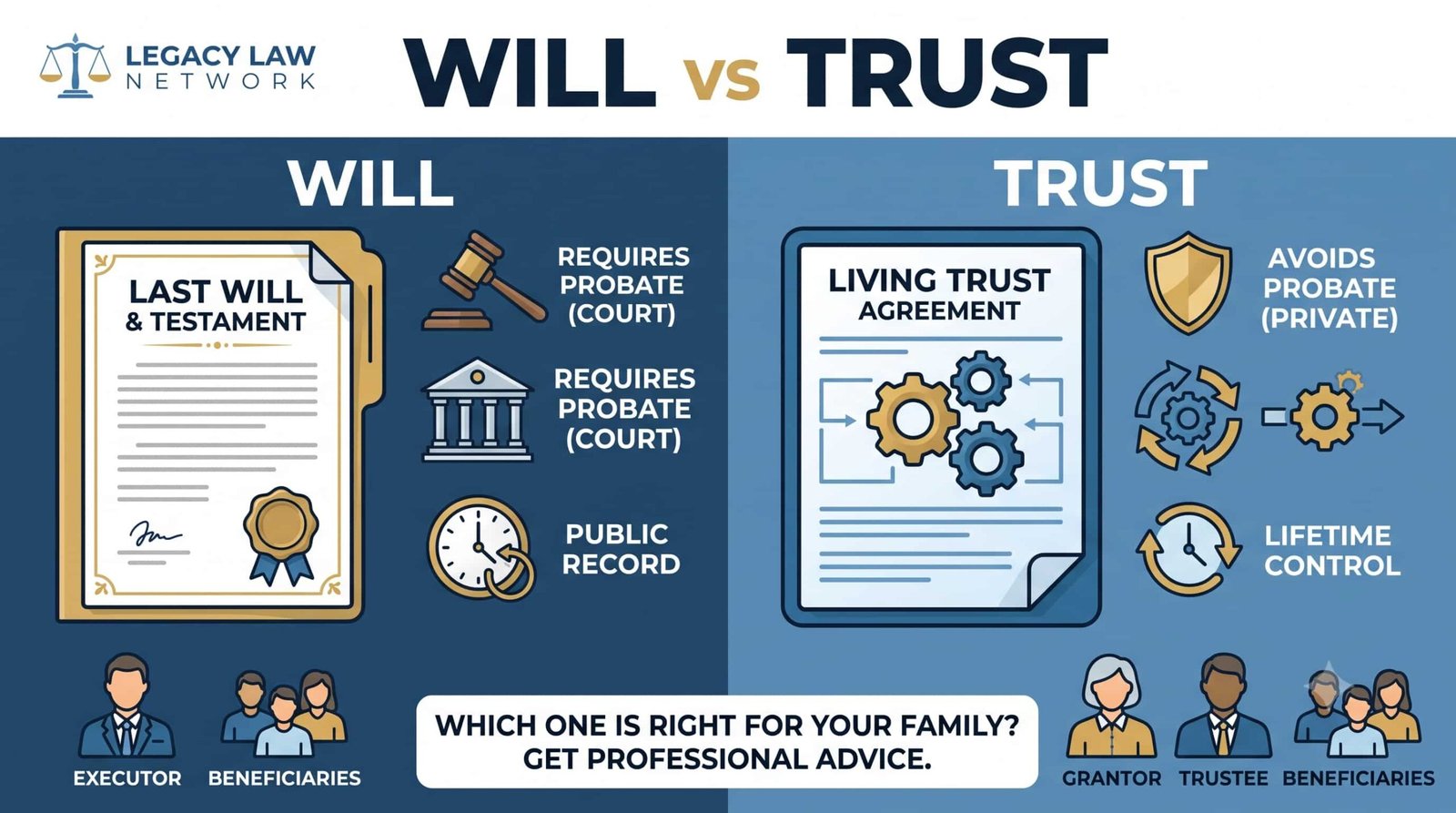
When creating an estate plan, one of the most common questions people ask is, “Should I have a will or a trust?” The answer depends on your personal circumstances, family situation, financial goals, and the type of assets you own.
While both documents are designed to help protect your loved ones and distribute your assets, they serve different purposes. Understanding the differences can help you make informed decisions about your estate plan.
If you’re just beginning your estate planning journey, explore our Estate Planning Resources for additional guides and educational articles.
What Is a Will?
A Last Will and Testament is a legal document that explains how you want your property distributed after your death. It also allows you to appoint an executor to manage your estate and name guardians for minor children.
A will can help you:
- Determine who receives your assets.
- Name an executor to administer your estate.
- Appoint guardians for minor children.
- Document your final wishes.
However, a will generally goes through the probate process before assets are distributed.
What Is a Trust?
A trust is a legal arrangement that allows a trustee to manage assets on behalf of beneficiaries according to your instructions.
Depending on the type of trust, it can take effect during your lifetime and continue after your death.
A trust may help:
- Manage assets during your lifetime.
- Transfer property to beneficiaries.
- Provide greater privacy.
- Potentially avoid probate for assets held within the trust.
Will vs. Trust: Side-by-Side Comparison
| Feature | Will | Trust |
|---|---|---|
| When it takes effect | After death | Usually during your lifetime |
| Requires probate | Usually yes | Often no (for trust assets) |
| Names guardians for children | Yes | No |
| Manages assets during incapacity | No | Yes (depending on the trust) |
| Privacy | Generally public through probate | Generally remains private |
| Controls asset distribution | Yes | Yes |
Advantages of Having a Will
- Allows you to name guardians for minor children.
- Can distribute assets according to your wishes.
- Usually less expensive and simpler to create.
- Works well for many straightforward estates.
Advantages of Having a Trust
- May help avoid probate.
- Provides greater privacy.
- Can manage assets if you become incapacitated.
- Offers more flexibility for distributing assets over time.
- Can help manage property for young beneficiaries.
When Is a Will Enough?
A will may be sufficient if you:
- Have a relatively simple estate.
- Need to name guardians for minor children.
- Own limited assets.
- Are beginning your estate planning journey.
An estate planning attorney can help determine whether a will alone is appropriate for your situation.
When Should You Consider a Trust?
A trust may be worth considering if you:
- Own multiple properties.
- Have significant investments.
- Own a business.
- Want to minimize probate.
- Desire greater privacy.
- Have beneficiaries who may need long-term financial management.
- Want a plan in place if you become incapacitated.
Do You Need Both a Will and a Trust?
In many cases, the answer is yes.
A comprehensive estate plan often includes both a will and a trust because each serves a different purpose.
For example:
- A will can name guardians for your children.
- A trust can help manage assets during your lifetime and distribute them after your death.
Combining both documents often creates a more complete estate plan.
Choosing the Right Estate Planning Strategy
No two families have identical estate planning needs. Your ideal strategy depends on factors such as:
- Your family structure.
- Your financial situation.
- The types of assets you own.
- Your long-term goals.
- Your state’s estate planning laws.
Working with qualified professionals can help ensure your plan reflects your wishes and complies with applicable laws.
How Legacy Law Network Can Help
Legacy Law Network connects individuals and families with experienced estate planning professionals who can help create personalized estate plans.
Our network includes:
Whether you’re deciding between a will and a trust or updating an existing estate plan, our professionals can help you make informed decisions.
Ready to start planning? Browse our Estate Planning Resources, attend one of our Estate Planning Seminars, or find an estate planning attorney today.
Frequently Asked Questions
Is a trust better than a will?
Neither is inherently better. A will and a trust serve different purposes, and many people benefit from having both as part of a comprehensive estate plan.
Can I have both a will and a trust?
Yes. Many estate plans include both documents because they work together to address different estate planning needs.
Does a trust completely avoid probate?
Assets properly transferred into a trust may avoid probate, but assets outside the trust may still need to go through probate.
Can a trust name guardians for children?
No. Guardians for minor children are typically named in a will.
Is a will less expensive than a trust?
Generally, creating a will costs less than establishing a trust. However, the right option depends on your overall estate planning goals.
Who should have a trust?
Individuals with significant assets, multiple properties, business interests, privacy concerns, or complex family situations may benefit from a trust.
Do I need an attorney to create a will or trust?
While online forms are available, working with an experienced estate planning attorney helps ensure your documents comply with state laws and reflect your wishes.
How do I know which option is right for me?
The best way to determine whether you need a will, a trust, or both is to consult with a qualified estate planning professional. Legacy Law Network can connect you with experienced estate planning attorneys, financial advisors, and CPAs to help you make informed decisions.